
Theta–gamma-spike coordination of neuronal representations during human sequence memory
Mar 17, 2026 | 4:00 pm CET | online, ZOOM ID: 7754910236Memory formation and maintenance are thought to rely on coordinated interactions between spiking activity and network oscillations, yet their precise mechanistic interplay in the human medial temporal lobe remains unclear. Using simultaneous single-neuron and local field potential recordings in epilepsy patients performing sequential working-memory tasks, we examine how oscillatory dynamics structure neuronal representations over time. We show that distinct gamma-band rhythms coordinate stimulus-specific spiking locally, while theta–gamma interactions organize recurrent epochs of activity and interregional communication. These findings suggest that sequential memories are supported by multiplexed spike–oscillation codes that flexibly coordinate local representations and network-level interactions in the human medial temporal lobe.
About the Speaker
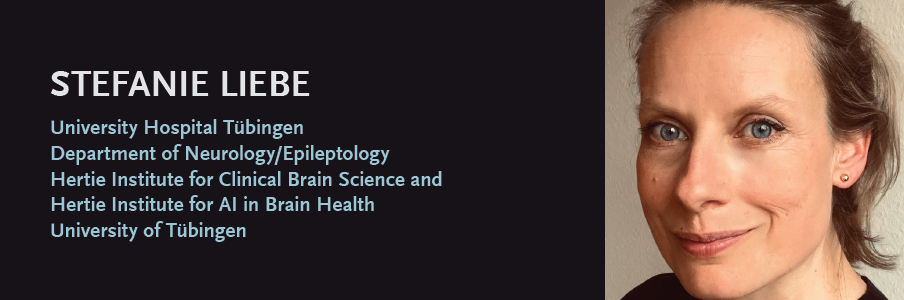
Dr. Stefanie Liebe is a Clinician Scientist interested working at the intersection of clinical and systems neuroscience and AI-based data analysis to understand neural mechanisms of physiological and pathological brain activity and advance diagnostic tools in clinical neuroscience. (Source, uni-tuebingen.de)
Join us for Brain Awareness Week Berlin
Brain Awareness Week is held each year mid-March, with the aim of increasing public awareness of research and progress in neuroscience with a focus on brain research. For more information go to the website of the Dana Foundation: Brain Awareness Week homepage
Host
This invited talk is hosted by SFB1315 project A09 (Prof. Dr. Livia de Hoz). SFB1315 Speaker Matthew Larkum (A04, A10, Z), will moderate Q&A.
Certificate of attendance:
Please contact: sfb1315.ifb@hu-berlin.de