

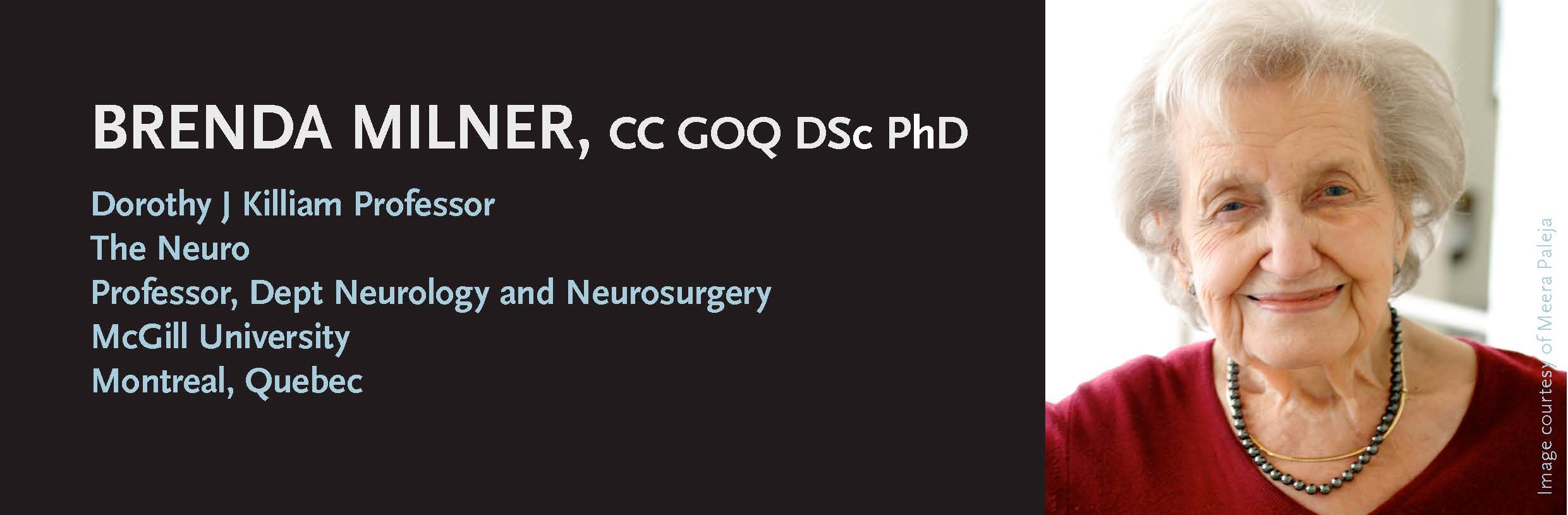
Brenda Milner Award Winners 2026
Dear CRC1315 Members and Colleagues,
we are very pleased to announce winners of the Brenda Milner Award 2026. The CRC1315 Steering Committee voted in favor of awarding three candidates with a monetary award of 5.000 EUR each, to support their career development, including network travel related to their CRC1315 collaborations.
Raquel Suárez Grimalt (A07/A08, AGs Owald & Scheunemann) receives the Brenda Milner Award 2026 in recognition of her exceptional scientific talent, originality, and breadth in neuroscience. From early in her career, she has demonstrated a remarkable ability to integrate diverse approaches, with research experience ranging from neuroanatomy in sharks to neurogenetics and behavior in Drosophila. Her scientific independence is reflected in her proactive development of innovative projects, including studies on drug-induced modulation of neural function. Raquel completed her PhD in David Owald’s lab with highest honors, producing outstanding work on oscillatory neural synchrony and its role in sensory filtering and sleep regulation, revealing conserved mechanisms of selective neural disengagement. This research resulted in a co–first-author publication in Nature (Raccuglia, Suàrez Grimalt et al., 2025; https://doi.org/10.1038/s41586-025-09376-2). As a postdoctoral researcher in Lisa Scheunemann’s lab, she now investigates stress-related influences on memory consolidation, with highly promising results. Across CRC projects A07 and A08, Raquel has made substantial intellectual contributions and is widely valued for her creativity, intellectual depth, and collegial engagement. She exemplifies the scientific excellence and curiosity embodied by the Brenda Milner Award.
Dr. Deetje Iggena (B05, AGs Ploner & Finke) is awarded the Brenda Milner Award 2026 as an outstanding researcher with extensive research experience in the animal domain (in collaboration with York Winter) as well as in behavioral studies of humans with and without memory impairments. Research on the hippocampus, on hippocampal neurogenesis and on the role of the hippocampus for memory consolidation have been a continuous focus of her work. Dr. lggena has developed several paradigms that closely align animal and human behavioral setups and has thus significantly contributed to the crosstalk between and A-, B- and C-sections of the CRC. In particular, her work on propofol effects on consolidation of spatial memory has inspired a similar animal project in A04 (lggena et al. 2022 Cortex; https://doi.org/10.1016/j.cortex.2022.08.004). Her observations of the role of multisensory input for compensation of spatial memory deficits during real-world navigation in humans is a decisive step towards a better understanding of discrepancies between animal and human experiments on spatial memory and inspired experiments in B04 and B05 (lggena et al. 2023 Commun Biol; https://doi.org/10.1038/s42003-023-05522-6). Furthermore, her highly original virtual reality take on long-term consolidation of spatial memories that were acquired up to three decades ago opens up new lines of behavioral research on memory consolidation where spatial memory and autobiographical memories meet (lggena et al. 2025, bioRxiv; https://doi.org/10.1101/2025.04.01.646566; revised version of the manuscript currently under review). Finally, in a series of highly demanding on-site experiments with a mobile virtual reality lab at the Tierpark Berlin, Dr. lggena has investigated spatial memory consolidation across delays of several weeks with hitherto unmatched precision by combining GPS-based navigation tracking and virtual reality paradigms. This dataset is currently under analysis and will without any doubt directly impact on current theories of spatial memory consolidation (See e.g., Farzanfar et al. 2023 Nat Rev Neurosci, https://doi.org/10.1038/s41583-022-00655-9).
Dr. Annapoorani Udhayachandran (A05, AG Poulet) is awarded the Brenda Milner Award 2026 for outstanding scientific and academic achievements and impactful contributions to memory research. Building on earlier work where she contributed to the study of rewarded thermal detection task for head-restrained mice (Paricio-Montesinos et al., Neuron, 2020; https://doi.org/10.1016/j.neuron.2020.02.035), she creativity redesigned the paradigm so that naïve mice could learn the task within a single training session. This enabled the discovery of a critical 4-hour window during which disruption of sensory cortex activity impairs memory consolidation. This robust, high-throughput behavior for head-restrained mice will allow cellular-resolution recordings and manipulations to address the neuronal mechanisms of memory formation and consolidation (manuscript submitted). Moreover, her expertise in activity-dependent labelling and molecular analysis of activated cells will allow her to address the molecular mechanism underlying engram formation. Beyond her own research, she has contributed substantially to supervision, CRC reviews and conferences as well as collaborative scientific activities. Through her insight, engagement and collegiality she has pushed forward memory research both within the CRC and beyond. Annapoorani’s creativity, perseverance and rigor make her fully deserving of this honour.
Please join us in congratulating Raquel Suárez Grimalt, Deetje Iggena, and Annapoorani Udhayachandran!
Best regards,
Matthew Larkum
CRC1315 Speaker
Participating Institutions